Solving Porosity in Complex Internal Structures.
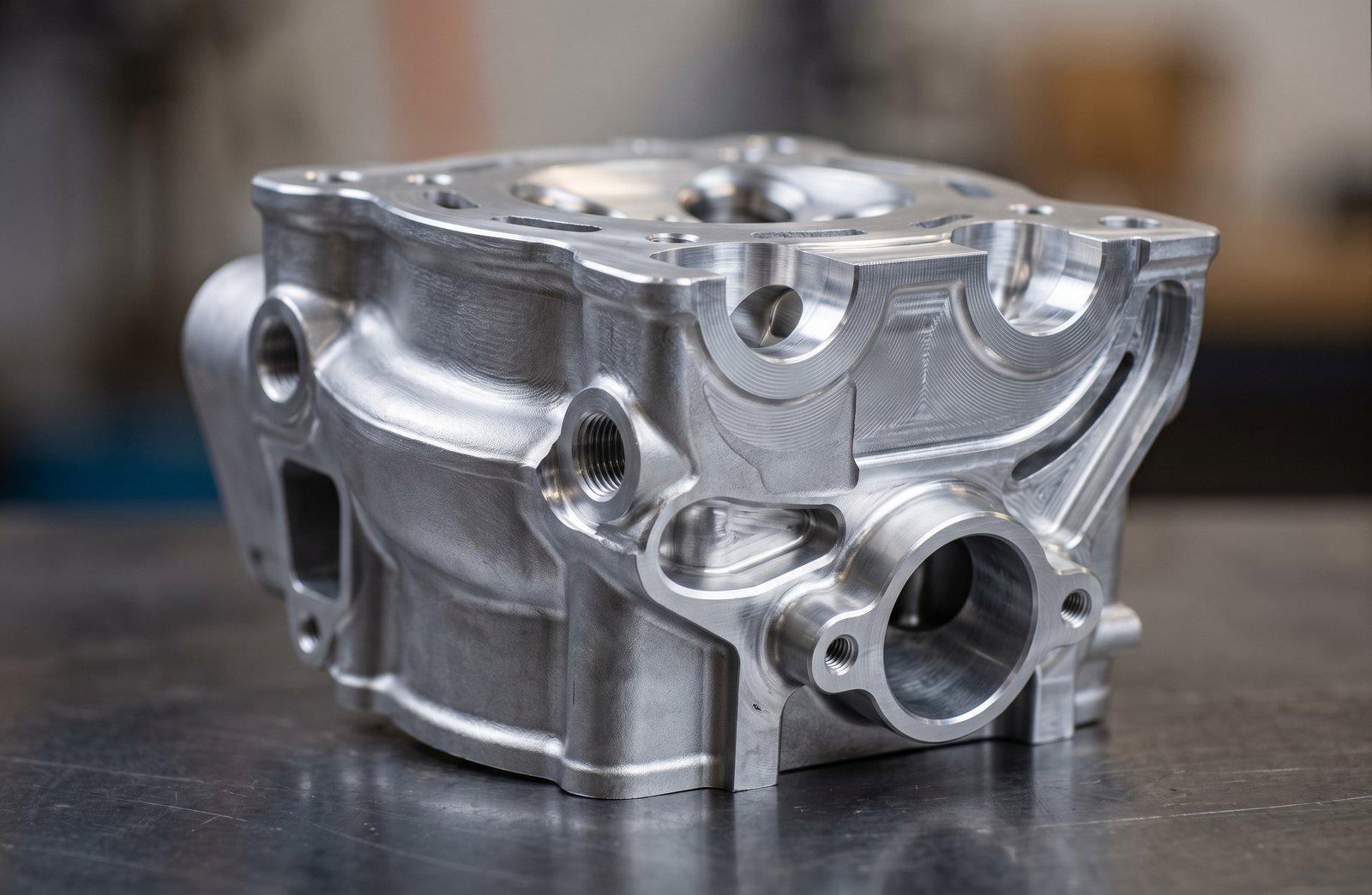
Water-cooled engine cylinder heads and high-flow hydraulic valve manifolds feature intricate internal runners, cross-drilled channels, and deep undercuts. Conventional casting shops suffer scrap rates exceeding 35% due to gas entrapment and wall collapse. Discover how Lister Metal implemented thermal-balanced mold design and vacuum-assisted die casting to achieve 100% pressure tightness.
Engineering Breakdown: Failure Mode vs. In-House Solution.
A rigorous comparative analysis of why other foundries fail and how our turnkey metallurgical control delivered success.
Primary Manufacturing Bottlenecks
The client's 3D print specified intersecting fluid passages passing through thick thermal sections adjacent to 2.2mm thin external cooling fins.
- Trapped Air Voids: Fast-moving molten alloy engulfed pockets of air in blind internal runners, forming sub-surface gas blisters.
- Thermal Shrinkage Cracks: Severe differential cooling between the heavy valve boss and adjacent thin walls caused hot tearing.
- Post-Machining Oil Seepage: Microscopic porosity was exposed during CNC milling of the main gasket sealing deck, failing pressure audits.
The Lister Metal Engineering Response
We completely redesigned the thermal gating and evacuation geometry in-house before cutting the H13 steel mold tooling.
- Sub-50mbar Vacuum Evacuation: Integrated chill-block vacuum channels to draw air out of cavities prior to the shot plunger advancing.
- Conformal Die Cooling Channels: Laser-drilled localized oil cooling circuits to normalize thermal dissipation across heavy valve bosses.
- 5-Axis Single-Setup Machining: Precision multi-axis milling ensured port bores and O-ring sealing faces were machined without vibration drift.
Technical Execution Roadmap.
How our engineering department moved from CAD analysis to certified serial volume production.
Flow-3D Velocity Analysis
Ran comprehensive mold flow simulations to locate the confluence point of molten fronts and repositioned overflow wells outside sealing zones.
Synchronized Slide Cores
Fabricated hydraulic dual-action core pulls on a 1200T cold-chamber press to form internal galleries without manual sand cores.
Multi-Axis Mill & Bore
Machined the cast body on a 5-axis vertical center using high-pressure through-spindle coolant to evacuate chips from deep cross channels.
100% Differential Testing
Every serial part underwent automated helium/air decay testing at 2.5 bar to confirm zero internal wall leakage before final packaging.
Inspection & Verification Deliverables.
Certified metrology records validating metallurgical integrity and geometric conformity.
| Inspection Dimension / Test | Design Tolerance Spec | Lister Metal Verified Value | Inspection Method | Quality Status |
|---|---|---|---|---|
| Main Gasket Face Flatness | 0.030 mm MAX | 0.012 mm | Zeiss Bridge CMM | PASS |
| Valve Seat Concentricity | Ø 0.015 mm | Ø 0.008 mm | Renishaw Touch-Probe | PASS |
| Internal Hydrostatic Pressure | 2.0 MPa (Held 60s) | 2.5 MPa (Zero Drop) | Hydrostatic Rig | PASS |
| Sub-Surface X-Ray Porosity | ASTM E505 Level 2 | ASTM E505 Level 1 | Industrial CT Scan | PASS |
Have a Casting with Difficult Internal Features?
Avoid expensive tool re-spins and scrap issues. Send your 3D CAD files to Lister Metal for an immediate DFM review and mold flow feasibility study.
Submit CAD for Engineering Review